Monday, May 31, 2010

The Telescope, The ISS & Space Exploration

Since the invention of the telescope by Galileo in 1609, our perception of the universe has siginificantly changed. Edwin Hubble built upon this idea and created and even more powerful instrument that discovered countless stars, planets and galaxies.
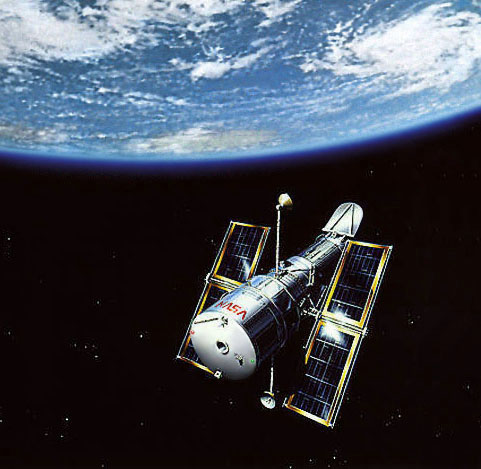
The International Space Station is an internationally developed satellite currently being assembled in Low Earth Orbit. Primarily a research laboratory, the ISS offers an advantage over spacecraft such as NASA's Space Shuttle because it is a long-term platform in the space environment, where extended studies into medicine, the human anatomy, buidling materials and construction materials take place.  

For the next task I want you to complete a 300 word reflection that discusses the following points:

  •  Explain the invention of the telescope and how it is related to the concept of exploration?

  •  What does the International Space Station allow us to explore?
This post is due to be published up on your blog by Monday 7th of June.


Tuesday, May 25, 2010

Burke & Wills: An Australian Expedition

In 1860-61 Robert O'Hara Burke and William John Wills led an expedition of 19 men with the intention of crossing Australia from Melbourne in the south to the Gulf of Carpentaria in the north, a distance of around 3,250 kilometres. At that time most of the inland of Australia had not been explored by non-indigenous people and was completely unknown to the European settlers.

The south-north leg was successfully completed (except they were stopped by swampland 5 kilometres from the northern coastline) but owing to poor leadership and bad luck, both of the expedition's leaders died on the return journey. Altogether, seven men lost their lives, and only one man, John King, travelled the entire expedition and returned alive to Melbourne.

Using th concepts covered in class I want you to post your thoughts in a reflection piece on the following questions:
  • What were some of the important features (includng equipment, technology and transportation) of a typical Australian overland explorer in the 1800's?
  • How did the story of Burke and Wills unfold? Who do you think was to blame and what could have been done differently?
  • What does this story tell you about early Australian exploration?
Your overall post that addresses the questions outlined above must be at least 350 words.


This post is due to be published up on your blog by Friday 4th of June.

Thursday, May 20, 2010

The Industrial Revoltion - Exploration & Invention

The Industrial Revolution, which began in England, was a period in the late 18th and early 19th centuries when the life of ordinary people was changed dramatically forever. It was a time of numerous inventions, so industry developed so fast that society could barely keep up.

Using the concepts covered in class and the websites below I want you to post your thoughts on the following questions:
  • How does the concept of exploration relate to the Industrial Revolution?
  • Who were the people that explored in this period of time? (This may not be exploration in the travelling sense, more so in relation to inventions)
  • What was a significant invention in the Industrial Revolution that had a major impact or influence on the 18th 19th Century society?
  • What was the impact of the exploration and invention of machines on everyday life in England throughout the Industrial Revolution?
Here are some websites you may want to use:

http://www.historylearningsite.co.uk/domestic_system.htm
http://www.nettlesworth.durham.sch.uk/time/victorian/vindust.html
http://library.thinkquest.org/4132/info.htm
Factories:
Inventions and developments in the cotton industry:
Coal mining:
Living conditions in industrial towns:

Your overall post that addresses the questions outlined above must be at least 350 words.

This post is due to be published up on your blog by Friday 28th of May.

Thursday, May 13, 2010

The Renaissance - 'The Quest for Knowledge and Answers'

"Renaissance," French for "rebirth," perfectly describes the intellectual and economic changes that occurred in Europe from the fourteenth through the sixteenth centuries.

During the era known by this name, Europe emerged from the economic stagnation of the Middle Ages and experienced a time of financial growth. Also, and perhaps most importantly, the Renaissance was an age in which artistic, social, scientific, and political thought turned in new directions.

Your next post requires you to go to the following website:

http://www.renaissanceconnection.org/index2.cfm

Once you have entered the website you must complete the following steps to get to the timeline needed for this activity.
  1. Enter the website.
  2. Watch the introduction to the website if you like (it's quite quirky), it does provide you with a summary of the Renaissance period.
  3. Click on the 'Art Explorer' link.
  4. You should know the answer to the question that is asked about the Renaissance, (if you don't the answer it is ALL OF THE ABOVE)
  5. Click 'Continue', you should then arrive at the 'Art Explorer' Timeline.
Now you should be at the relevant timeline needed to complete the following tasks. These tasks need to be completed in ONE post on your blog:
  • Summarise 'The Quest for Knowledge' and 'Everyday Life' under the stated headings. These summaries need to be approximately 100 words.
  • Choose one icon relating to 'Arts / Architecture' and one icon for 'Science / Technology' and write a 100 word summary about the painting, invention, discovery, ideas, etc.
Remember: These summaries all need to be in ONE post on your blog with headings.

This post is due to be published up on your blog by Friday 21st of May.

Sunday, May 9, 2010

Leonardo da Vinci - Discovery, Invention, Creation and Exploration

After watching the documentary 'Leonardo da Vinci - Dangerous Liasons' write a 300 word summary addressing the following questions.

Leonardo da Vinci often pushed the boundaries in order to pursue his passions and his interests. What were some of the things da Vinci was exploring in the 15th and 16th centuries, sometimes 400 years prior to anyone else making these same discoveries? Considering that most of his notes were lost for several hundred years, what impact do you think these ideas and innovations had on European civilization, if any?

This post is due to be published up on your blog by Friday 15th of May

Sunday, May 2, 2010

Explore, Conquer & Colonise

Using the information from our previous Inquiry sessions concerning the consequences of exploration and the impact of colonisation, I want you to write a 200 word reflection explaining your thoughts and ideas on the topic. You could include information about a number of ideas in your reflection, even the work you have completed today on on the Spanish army conquering the Aztecs.

In order to get you thinking (again!) about these concepts, use the work we completed in class (mix and match image analysis) surrounding the impact of colonisation on indigenous people. This work should be located in your individually labelled plastic pocket.

This post is due to be published up on your blog by Friday 7th of May